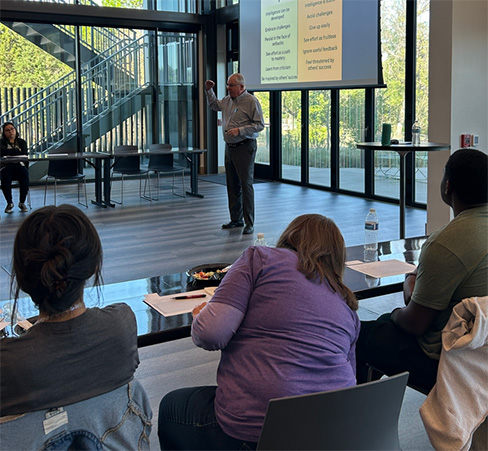
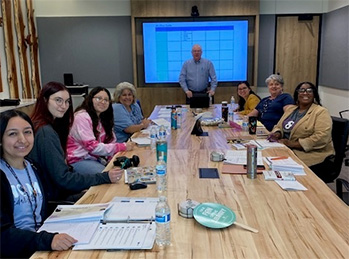
“Steve (Practice To Business) helped me become a steadier, more effective leader under pressure. As I worked through people management challenges, he helped me reconnect with practical leadership techniques, identify new ways to respond, and handle situations with more confidence and clarity. His ability to listen carefully, analyze the real issue, and offer useful, straightforward solutions made a measurable difference in both my performance and my team’s overall experience.”
Michael Gaffney
Executive Vice President of Operations
Klyde Warren Park
High-performance Leadership: More Than Intensity, It’s Consistency
Our culture is fascinated with the idea of high performance. We hear the phrase everywhere. There are high-performance cars, high-performance athletes, high-performance teams, and high-performance training programs. It sounds impressive, but it also raises an important question; what does high performance really mean, especially in leadership?
Over the years, I have participated in more leadership workshops, training programs, books, seminars, and Zoom calls than I could count. Leadership development matters, and I continue to both deliver it and invest in it. But building a full toolbox of leadership skills does not automatically make someone a high-performance leader. It may make them more capable or more accomplished, but high performance is something deeper. It is not just about what a leader knows. It is about how consistently that leader shows up, performs, and influences others over time.
Consistency under pressure is what separates high performers from high achievers — download the free Pressure Performance Scorecard and see how consistently you’re showing up when it matters most.
What is High-Performance Leadership?
Many leaders confuse occasional intensity with true high performance. I once worked for a sales manager who had the skills to be effective, but he was often missing from the action, both physically and mentally. Every now and then, he would reappear with a burst of energy, a passionate speech, and a highly visible show of motivation. As a sales team, we learned to tolerate those moments, knowing that he wouldn’t follow up and would soon fade away until the next moment of inspiration hit him. That was not high performance.
High-performance leadership is not measured by occasional surges of effort. It is measured by the consistent performance of the team. True high-performance scales through other people. It is not intensity for a moment. It is the ability to perform at a strong level repeatedly, steadily, and even under pressure. Anyone can sprint for a short distance. High performers sustain.
Signature Skills Are the Key to High-Performance Leadership
Based on strengths-based psychology and years of coaching leaders, I define signature skills as distinctive, natural, and repeatable abilities that consistently create value and positive impact when a person is operating at their best.
These are not just learned competencies or polished techniques. Signature skills are the abilities that feel most like you. They are often the things you do so naturally that you underestimate them. Yet, they are also the very things that tend to create your greatest impact as a leader.
What Makes a Skill “Signature”?
There are several characteristics that help us recognize a true signature skill.
First, signature skills feel natural. They may have been sharpened over time, but they fit who you are. They are not forced. This might look like calming a tense situation, building trust quickly, simplifying complexity, or energizing others.
Second, signature skills are repeatable. They show up consistently across situations, not just in one standout moment. When people say, “You always seem to bring clarity,” or “You are always steady under pressure,” they are often pointing to a signature skill.
Third, signature skills are valuable. They create meaningful results. They help people, teams, and organizations perform at a higher level.
Fourth, signature skills are often recognized by others before we recognize them ourselves.
Because they come naturally, we may overlook them. Other people usually see the pattern more clearly than we do.
Finally, signature skills are most visible when the right foundations are in place. show up best when we are using our strengths, emotionally regulated, grounded in a growth mindset, and operating with healthy energy and well-being.
In other words, your signature skills are the things you do naturally, consistently, and powerfully that create value for others. They are often hiding in plain sight because they come so naturally to you.
Where High-Performance Leadership Begins
High-performance leadership starts with self-awareness. Many leaders want to improve performance without first understanding how they perform best. That is a difficult assignment, because it requires honesty. We have to be willing to look closely at when we are at our best, when we are not, and what conditions make the difference.
In 2025, I interviewed a number of my past coaching clients using the same set of questions. From their responses, I explored why they sought coaching, what obstacles they were facing, where they felt stuck, and what helped them perform at a higher level. I paid close attention to the words and phrases that repeated across those conversations. From that work, I identified four key areas that consistently showed up as essential to high-performance leadership. That research became the basis for the Signature Skills Development Model (SSDM), a more holistic path for helping leaders strengthen performance and sustain it in pressure environments.
The Four Pillars of High Performance
Each pillar in the Signature Skills Development Model plays an important role in helping leaders identify and develop their signature skills.
Strengths
Strengths are the engines of sustainable performance. They help us understand not only what we do well, but also how we are at our best when we are doing it. My favorite simple definition of a strength is this: something you are good at and enjoy doing.
Assessments can be helpful in beginning the process of discovering strengths, but the deeper work of identifying and developing strengths should be viewed as a lifelong pursuit. It is not a one-time insight. It is an ongoing journey.
Under pressure, strengths matter even more. Pressure can cause leaders to overcompensate, overextend, or operate outside of the patterns that make them effective. A leader who understands their strengths is more likely to stay grounded, focused, and effective when demands increase. Strength awareness helps leaders return to their best patterns instead of drifting into reactive habits that reduce performance.
Emotional Intelligence
Emotional intelligence is the ability to recognize, understand, and manage emotions in ourselves while also being able to read and respond effectively to the emotions of others. In leadership, emotional intelligence is essential because performance is rarely just about strategy or technical ability. It is also about relationships, communication, trust, and influence.
Leaders with strong emotional intelligence tend to create healthier team dynamics, better conversations, and stronger cultures. In pressure environments, emotional intelligence becomes even more important. Pressure can shorten patience, distort tone, and increase reactivity. Leaders with emotional intelligence are more likely to notice those shifts early, regulate themselves, and respond with intention rather than impulse. That ability protects trust, preserves composure, and strengthens leadership effectiveness when the stakes are high.
Mindset
Mindset is the lens through which leaders interpret challenge, opportunity, setback, and growth. A healthy mindset is marked by curiosity, adaptability, resilience, and a willingness to learn. In the Signature Skills Development Model, mindset matters because signature skills are developed most fully in leaders who are open to growth and willing to see obstacles differently.
Pressure has a way of narrowing mindset. Leaders can shift from curiosity to judgment, from learning to defensiveness, and from possibility to fear. When that happens, decision-making becomes more limited and growth slows down. Leaders who intentionally develop a healthy mindset are better able to remain flexible, solution-focused, and forward-looking under pressure. A strong mindset helps preserve confidence and keeps adversity from derailing performance.
Well-Being
Well-being is the physical, emotional, and mental condition that supports sustained leadership performance. It includes energy management, rest and recovery, boundaries, healthy habits, and the ability to maintain perspective.
This pillar is often overlooked, especially by leaders who are used to pushing through pressure. But well-being is not a luxury. It is part of the foundation that supports strong leadership over time. Even highly capable leaders struggle to access their signature skills when they are depleted, distracted, or chronically fatigued.
In pressure-performance environments, well-being is often the hidden factor behind reduced clarity, lower patience, and poorer decisions. Over time, fatigue can quietly erode emotional regulation, leadership presence, and cognitive sharpness. Leaders who prioritize well-being are far better positioned to sustain performance, think clearly, and remain effective over the long haul rather than relying on short bursts of success followed by decline.
Final Thought
High-performance leadership is not about doing more, pushing harder, or creating occasional flashes of intensity. It is about learning how to perform at your best consistently, especially when pressure rises. That kind of leadership begins with self-awareness and grow through the intentional development of strengths, emotional intelligence, mindset, and well-being.
When those four pillars are healthy and working together, signature skills become more visible, more reliable, and more impactful. That is where high-performance leadership becomes sustainable. And that is where leaders begin to create stronger results not only for themselves, but for the people they lead.
Want to know if you’re building real high performance — or just collecting more tools for the toolbox? Take the free Pressure Performance Scorecard and find out download the free Pressure Performance Scorecard and find out.