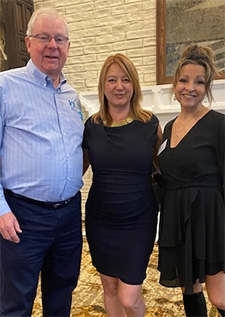
“Steve helped me perform more effectively under pressure. I had the technical skills, but I needed to build trust, navigate a complex environment, and influence more effectively. Through his coaching, I developed greater self-awareness, stronger relationships, and a more confident voice in key decisions.”
Junnior D.
VP Finance, Airgas
What Strong Leaders Do Differently
Most leaders want high-performing teams.
They want teams that execute well, communicate clearly, and consistently deliver results. They want alignment, accountability, and momentum.
But many teams that appear productive on the surface are not truly high performing.
They are working hard.
They are busy.
They may even be hitting their numbers.
And yet, underneath the surface, something is off.
Conversations are cautious.
Decisions take longer than they should.
Trust is not as strong as it needs to be.
Pressure is building, and no one is quite sure how to address it.
High performance Leadership is not just about output.
It is about how results are created, and whether they can be sustained.
If pressure is quietly building beneath your team’s results, the free Pressure Performance Scorecard can help you see exactly where — before it costs you trust, speed, or talent. DOWNLOAD NOW
High Performance Is Not Intensity. It Is Sustainability.
One of the most common misconceptions about high-performance team leadership is that it requires pushing harder, moving faster, and demanding more.
That approach can work, for a while.
But over time, it creates fatigue, reduces clarity, and begins to erode the very performance it was intended to improve.
True high-performance teams are not defined by bursts of intensity.
They are defined by consistent, repeatable performance over time.
That kind of performance requires something deeper than effort.
It requires leadership capacity.
The Real Work of Leading Teams for High Performance
High-performance team leadership is not just about strategy, execution, or accountability.
It is about creating conditions where people can think clearly, communicate openly, and perform at their best, especially under pressure.
Through my work with leaders and teams, I’ve found that sustainable high performance is built on four foundational pillars:
- Strengths
- Emotional Intelligence
- Mindset
- Well-Being
These are the pillars of the Signature Skills Development Model, and they form the foundation for how leaders create high-performing teams.
1. Strengths: Putting People in Position to Perform
High-performing teams are not built by treating everyone the same.
They are built by recognizing how individuals perform at their best.
Leaders who understand strengths are better able to:
- align people with the right responsibilities
- leverage natural capabilities
- reduce unnecessary friction
When people are operating from their strengths, performance becomes more natural and more sustainable.
Under pressure, this becomes even more important.
Leaders who ignore strengths often force people into roles or behaviors that require constant compensation. Over time, that reduces confidence, increases fatigue, and limits effectiveness.
High-performance leaders consistently ask:
Are my people positioned to perform at their best?
2. Emotional Intelligence: The Foundation of Trust and Communication
Technical skills may create initial success, but emotional intelligence sustains it.
High-performing teams are not just aligned on goals, they are able to communicate openly, navigate tension, and address issues early.
This is where many teams struggle.
I have been in more coaching sessions than I can count where individuals were hesitant, uneasy, or even afraid to have an honest conversation with a leader or a colleague.
They knew something needed to be said.
They just didn’t feel safe saying it.
That is not conducive to high performance.
When conversations are avoided or delayed:
- issues compound
- trust erodes
- performance slows
High-performance leaders understand that their role is not just to drive results, it is to create an environment where honest conversations can happen when they are needed most.
This is where psychological safety becomes critical.
Psychological safety does not mean lowering standards or avoiding accountability.
It means creating a climate where people feel safe to:
- speak up
- challenge ideas
- admit mistakes
- share concerns
Without fear of being dismissed, blamed, or penalized.
When psychological safety is present, communication improves, trust strengthens, and teams move faster.
When it is absent, people protect themselves, and performance suffers.
3. Mindset: The Lens That Shapes Performance
Mindset determines how leaders interpret challenges, setbacks, and pressure.
In healthy environments, leaders operate from curiosity.
They ask questions.
They explore options.
They remain open.
But under pressure, mindset often shifts.
Curiosity narrows into judgment.
Openness becomes defensiveness.
Learning gives way to certainty.
When that happens, decision-making suffers and growth slows.
High-performance team leadership requires leaders who can maintain a growth-oriented, learning mindset, even when the stakes are high.
Leaders who can step back, reassess, and stay flexible are far more effective than those who become rigid or reactive.
4. Well-Being: The Most Overlooked Performance Driver
Well-being is often treated as a personal issue.
In reality, it is a leadership issue.
Leaders who are depleted struggle to:
- think clearly
- regulate emotion
- communicate effectively
- make sound decisions
And those effects cascade through the team.
Many organizations unintentionally reward overextension.
Long hours and constant availability are often interpreted as commitment.
But over time, fatigue reduces cognitive sharpness, increases reactivity, and limits performance.
High-performance leaders understand that sustainable performance requires sustainable energy.
They model and support habits that allow both themselves and their teams to operate at a high level over time, not just in short bursts.
Performance Changes Under Pressure
One of the most important realities in leadership is this:
Performance is not static.
It changes under pressure.
Leaders who are highly capable in calm conditions may begin to drift when pressure increases.
Their thinking may narrow.
Their confidence may shift.
Their communication may change.
Their energy may decline.
This is not a failure of capability.
It is a shift in capacity.
High-performance team leadership requires the ability to recognize these shifts early, and respond intentionally.
What High-Performance Leaders Do Differently
High-performance leaders do not just focus on results.
They focus on the conditions that produce those results.
They:
- position people to operate from strengths
- create environments where honest conversations can happen
- maintain a growth-oriented mindset
- protect the energy required for sustained performance
Most importantly, they understand that performance is not just about what the team produces.
It is about how the team functions while producing it.
A Final Thought
High performance is not just about achieving results.
It is about achieving results in a way that can be repeated, without eroding trust, clarity, or energy.
Because in the end:
Teams that sustain high performance are not the ones that push the hardest.
They are the ones that are led most intentionally.
Busy isn’t the same as high performing. Download the free Pressure Performance Scorecard and find out what’s really happening beneath your team’s results.