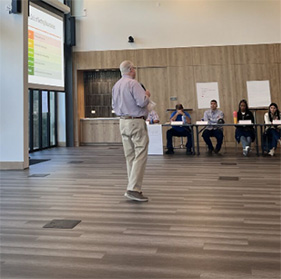
I recently observed an organization that considered itself to be a leader in its industry. From the outside, it had achieved a meaningful level of success and seemed to be looking toward the future with anticipation.
But there was one glaring problem.
Many of the team members were afraid to have open and honest conversations. They were concerned about falling out of favor, being judged, or even facing some form of reprisal if they said what they really thought.
That is not a small issue. That is a pressure response. And it kills high performance.
High-performance teams do not happen by accident. They are built intentionally through leadership, clarity, trust, emotional intelligence, meaningful work, and sustainable performance habits. When pressure rises, the real strength of a team is revealed. The leader’s role is not to remove all pressure. That is neither realistic nor helpful. The leader’s role is to create conditions where people can perform well without burning out, shutting down, or turning against one another.
For the purpose of this article, a team is not simply a collection of people on an organizational chart. A team is a group of people whose work, decisions, communication, and behavior are connected by a shared outcome. In a true team, performance is never just individual. It is relational, cultural, and collective.
A high-performance team is a pressure-ready team. It is a team that can stay clear, connected, emotionally regulated, strengths-aware, and purpose-driven when the stakes are high.
So, what does it take to build that kind of team?
Silence, fear, and self-protection are pressure responses — not personality traits. Take the free Pressure Performance Scorecard assessment and see how pressure is showing up on your team.
Clarity Gives Pressure Direction
One of the biggest mistakes leaders make is asking for higher performance before creating shared clarity.
Teams need to know: What are we trying to accomplish? What matters most right now? What does success look like? Who owns what? And perhaps most importantly, why does this matter?
In her book The Science of High-Performance Leadership, Sherry Yellin, PhD, writes that “the brain learns best whole-to-parts. Forest first and then the trees.”
That idea has stayed with me because I have seen it play out so many times.
My son went through high school and college with a serious disdain for algebra. In frustration, he would often ask, “Why do I need algebra? What is its purpose? How will I ever use this?”
As you can imagine, he struggled with algebra, until one day, it clicked.
He was fascinated with electronics, and while studying for a certification that mattered to him, he discovered that algebraic formulas were useful in determining important data he needed. In that moment, all three of his questions were answered. From that day forward, he thrived in the math courses he took.
The difference was not that algebra suddenly became easier. The difference was that he saw the big picture.
The same is true in the workplace. Without clarity, even talented people can waste energy, duplicate effort, or work hard on the wrong things. Pressure without clarity creates confusion. Clarity gives pressure a productive direction.
Psychological Safety Is Not Softness
Psychological safety does not mean everyone is comfortable all the time. It does not mean lowering standards, avoiding accountability, or making sure no one ever feels challenged.
It means the team is safe enough to have the conversations that performance requires.
I have been in many coaching sessions where people were afraid, uneasy, or unsure about having an honest conversation with a leader or a fellow team member. They knew something needed to be said, but they were not sure it was safe to say it.
That kind of hesitation is costly.
High-performance teams tell the truth earlier. They surface concerns before they become problems. They challenge ideas without attacking people. They ask for help without fear of being labeled weak or incompetent. They know how to disagree without damaging the relationship.
Google’s Project Aristotle found psychological safety to be one of the most important dynamics in effective teams. That finding confirms what many of us have seen in real life: people do their best work when they can speak honestly, take reasonable risks, and contribute without fear.
The leader has a major role in creating that environment.
If the leader punishes honesty, the team learns to hide. If the leader becomes defensive when challenged, the team learns to stay quiet. If the leader invites truth, listens well, and responds with curiosity, the team learns that honest communication is not only allowed, it is expected.
Emotional Intelligence Keeps Pressure from Becoming Reactivity
When pressure rises, teams watch the leader.
If the leader becomes reactive, defensive, vague, impatient, or emotionally unavailable, the team often mirrors that behavior. If the leader stays calm, clear, curious, and grounded, the team has a much better chance of doing the same.
Years ago, in one of my first formal leadership positions, I was unhappy with the way my team was performing. I unloaded on them in our weekly sales meeting on a Monday morning, which, looking back, was not exactly the best way to start the week.
I did not facilitate discussion. I did not ask good questions. I became reactive and defensive, and I was socially unaware of what the team members were experiencing in that moment.
The team mirrored my behavior. Communication suffered. The real challenges we needed to address were postponed.
I learned a big lesson that day, and it stayed with me.
Under pressure, the leader’s emotional state becomes contagious. A high-performance leader does not eliminate pressure; they regulate themselves well enough that pressure does not distort their judgment, communication, or presence.
This is where emotional intelligence becomes a performance issue, not just a personal development topic. Self-awareness, self-regulation, social awareness, and relationship management all influence how a leader shows up when the stakes are high.
A leader who can pause, listen, ask, clarify, and respond thoughtfully creates a different kind of team environment than one who reacts from frustration or fear.
Strengths and Signature Skills Help People Contribute at Their Best
Most teams have talented people. But talent alone does not create a high-performance team.
A high-performance team understands the strengths of its members and gives people opportunities to contribute from those strengths. It does not treat people as interchangeable parts. It recognizes that each person brings a different combination of ability, experience, perspective, motivation, and energy.
That is where signature skills become important.
A high-performance team is not just a collection of job descriptions. It is a collection of signature skills, the distinctive strengths, emotional intelligence, mindset, and well-being habits each person brings to the work.
Leaders should be asking questions like:
What does each person naturally bring?
Where do they create energy, insight, momentum, or stability?
Where are they most likely to overuse a strength under pressure?
How do their strengths complement others on the team?
When people understand their own strengths and the strengths of others, collaboration improves. Communication improves. Appreciation improves. The team begins to see difference as an asset rather than a source of frustration.
The ongoing identification and development of signature skills helps each team member contribute more consistently at their best.
Mindset Determines Whether the Team Moves Toward Learning or Blame
When something goes wrong, teams tend to move in one of two directions.
They either become curious and ask, “What can we learn?” or they become defensive and ask, “Who is to blame?”
The fastest way to weaken team performance is to let pressure shift the culture from learning to judging.
High-performance teams build the habit of learning. They review mistakes without humiliation. They talk about missed expectations without personal attack. They normalize feedback as part of growth. They are willing to look honestly at what happened, what was missed, what needs to change, and what can be improved next time.
That does not mean accountability disappears. In fact, accountability becomes stronger when people are not spending their energy protecting themselves.
A learning mindset allows the team to keep improving. A judging mindset causes the team to hide, defend, blame, and repeat the same patterns.
The leader sets the tone here as well. When leaders respond to mistakes with curiosity and accountability, people learn. When leaders respond with blame and shame, people protect themselves.
High-performance teams need a mindset that can handle reality without turning every problem into a personal indictment.
Well-Being Makes Performance Sustainable
A lot of articles on high-performance teams focus on output, speed, productivity, and execution. In other words: How can we work faster, harder, and longer?
But performance that cannot be sustained is not truly high performance.
Under pressure, team members need energy, recovery, focus, and resilience. A depleted team may still produce results for a while, but eventually decision quality, creativity, patience, and collaboration begin to decline.
Burnout can masquerade as commitment for a while. People may keep showing up, keep pushing, keep saying yes, and keep producing. But over time, depleted teams do not become stronger. They become more reactive, less creative, and less effective.
Well-being is not separate from performance. It is one of the conditions that makes performance possible over time.
This does not mean leaders are responsible for managing every aspect of someone’s personal well-being. But leaders are responsible for paying attention to the pace, pressure, expectations, communication patterns, and cultural norms they help create.
A team that is constantly exhausted, unclear, and reactive will not sustain high performance. A team that has clarity, recovery, trust, and healthy rhythms has a much better chance.
Leaders Shape the Culture by What They Model and Reinforce
High-performance culture does not start with a motivational speech, a values poster, or a team-building event.
It starts with what leaders consistently model, reward, tolerate, and reinforce.
Every leader is shaping culture, whether they are intentional about it or not.
If a leader says honesty matters but punishes bad news, the culture learns to hide bad news. If a leader says collaboration matters but rewards individual heroics at the expense of the team, the culture learns that collaboration is optional. If a leader says well-being matters but celebrates constant overwork, the culture learns what is really valued.
A leader creates high-performance conditions by modeling clarity, emotional regulation, curiosity, honest communication, strengths-based contribution, learning, and sustainable habits.
That is the real work of leadership.
Pressure is now the norm rather than the exception. The goal is not to remove pressure from the workplace. Pressure is part of leadership, growth, and meaningful work.
The goal is to build leaders and teams who are ready for pressure, clear enough to decide, grounded enough to communicate, confident enough to contribute, and healthy enough to sustain their performance over time.
That is what high-performance teams require.
And it starts with intentional leadership.
You can’t remove pressure, but you can learn to lead through it. Download the free Pressure Performance Scorecard and discover what’s holding your team back from true high performance.